The Effect of Womanhood on Disability

Though the rights and treatment of people with disabilities has been getting better as time has gone on, there are still major problems to be fixed within our society. The same logic can be applied in the case of women, with both facing discrimination and abuse. Regardless of the way society has been progressing, the lives of both women and disabled people are affected in many ways due to oppression, with disabled women being made to deal with being persecuted because of both identities. Women with disabilities are, because of their woman hood, subject to another layer of ill treatment in ways that disabled men are not. The challenges that disabled women face due to their disability and being female are often overlooked, but are clear through examining the de-sexualization of disabled women, the beauty standard forced upon them, and the rampant abuse that many women with disabilities go through.

The experience of being woman and of being disabled are intertwined in many ways, full of different experiences gained from living in a sexist, ableist society. Though there are many different nuances for the two, the similarity is that “disability, like femaleness, is not a natural state of corporeal inferiority, inadequacy, excess, or a stroke of misfortune. Rather, disability is a culturally fabricated narrative of the body, similar to what we understand as the fictions of race and gender” (Garland-Thomson 259).  Womanhood has been compared to disability for centuries, with even Aristotle describing women as “mutilated males” and as “monstrosities” (260).  This comparison still continues now, with a 2001 study on stereotyping showing that housewives, disabled people, and blind people were judged as being similarly incompetent (260). These descriptions serve to show how society views both women and people with disabilities: as helpless, weak, and inadequate beings.

Though able bodied women are objectified, the opposite seems to happen with disabled women. Instead, disabled women are seen as asexual creatures, unable to feel love or lust towards anyone, and unable to receive love or lust from anyone. While “Cultural stereotypes imagine disabled women as asexual, unfit to reproduce, overly dependant, unattractive- as generally removed from the sphere of true womanhood and feminine beauty”, this means that, in order to feel and be a “real” woman, one must be objectified and beautiful at all times (266). 

This removal of femininity can even be seen with different Barbie dolls. The doll with a wheelchair, named Becky, features comfortable clothes, flat feet, and moveable joints, while her sister doll Barbie is stuck in ultra-feminine stereotypes (266). As Rosemarie Garland-Thompson describes, “The paradox of Barbie and Becky, of course, is that the ultra-femized Barbie is a target for sexual appropriation both by men and beauty practices while the disabled Becky escapes such sexual objectification at the potential cost of losing her sense of identity as a feminine sexual being” (266). This sexualization of abled women and de-sexualization of disabled women shows how being a woman and being objectified are equated, and how, in order to be sexual as a woman, one must allow herself to be seen as an object. Disabled women are then forced to hypersexualize themselves in order to be seen as even remotely sexual beings. For instance, parapalegic actress Ellen Stohl asked to appear in the magazine Playboy in order to show how disabled people have sexualities too. Had Stohl not been disabled, there would have been no need or want for her to pose for Playboy, meaning that “the performance of excessive female sexuality was necessary to counter the social interpretation that disability cancels out sexuality” (267).
Within a patriarchal society, feminine beauty standards are set, with all women being expected to follow them regardless of how they feel. The same goes for disabled women, however they have the additional burden of fitting an ableist society’s beauty standards as well. This creates an ideal for disabled women that is twice as hard to fit into, because they are not only expected to look and act within dictated feminine roles, they are also expected to look and act as though they do not have a disability. This is often done through surgeries forced onto disabled people from a young age, ones that, though they might have agreed to as a child, regret somewhat as adults. This phenomenon can be seen in poems like Sheila Black’s “What You Mourn” with lines like “The year they straightened my legs, / The young doctor said, meaning to be kind, / Now you will walk straight on your wedding day, but what he could not / imagine is how even on my wedding day / I would arch my back and wonder / about that body I had before I was changed” (Black, lines 1-7). Though these surgeries are often said to be done to make things easier for the disabled child, ignoring how “these procedures benefit not the affected individuals, but rather they expunge the kinds of corporeal human variations that contradict the ideologies the dominant order depends on to anchor truths it insists are unequivocally embedded into bodies” (264). The same phenomenon occurs with both abled and disabled women and plastic surgery. Advertised as helping women feel less insecure and more confident, it instead creates the beauty standard and reconstructs what it means to be ‘normal’. Cosmetic surgery or surgery to help disabled people fit norms they do not need to fix turns women into nothing more than things to be looked at, positing “female and disabled bodies, particularly, as not only spectacles to be looked at, but as pliable bodies to be shaped infinitely so as to conform to a set of standards called ‘normal’ and ‘beautiful’” (263).

The issues that disabled women face are more than skin deep, however. Though ableism pervades and is engrained in our culture in ways that are often unseen, the abuse of disabled people, specifically women, is something that is seen all too often. A study found that one out of ten women with disabilities had “experienced physical, sexual, or disability related violence within the past year” (Nosek and Hughes 229). Another study found that 62% of both disabled and non-disabled women had been physically, emotionally, or sexually abused at some point over their lives, however disabled women “experienced abuse at the hands of a greater number of perpetrators and for longer periods of time” than women without disabilities (229). While women with disabilities face abuse at around the same rate as non-disabled women, “they also experience disability-related vulnerabilities to abuse associated with reliance on others for access to assistive devices and medication and assistance with essential personal needs such as toileting and dressing” (229). The United Nations reports that over half of all women with disabilities have been physically abused at some point (del Río Ferres, Megias, and Expósito 67) and a report from the European Parliament states that “almost eighty percent of women with disabilities are victims of violence, and that they are four times more likely than other women to suffer from sexual violence” (67). 

The exploitation of women with disabilities is prevalent as well, in both industrialized and developing countries. In industrialized countries, data showed that “men with disabilities were almost twice as likely to be employed as women with disabilities, while women with disabilities in full-time jobs earned only 56 percent of what men with disabilities in full time jobs earned” (Emmett and Alant 447). The trend could explain why 33.8 percent of women with a work disability were living in poverty as compared to 24.2 percent of men (450). This lack of funds for women with disability starts from a young age as well, as 63.5 percent of children awarded Supplemental Security Income in the United States were boys while only 36.5 percent were girls (448). In developing countries, while the percentage of disabled girls is smaller than the percentage of disabled boys, researchers suggest that this could be because “girls and women with disabilities receive less care and support, and die earlier” (454). A study of three villages in India also found that the percentage of adult males with disabilities receiving treatment was between 53 and 56 percent, whereas for adult women with disabilities the percentages ranged from 11 percent to 39 percent (456).

The oppression and hardships that women with disabilities face is something that is often ignored but is clearly present. Through the de-sexualization and infantilization of disabled women, the harmful beauty ideals impressed upon every young girl, and even more so upon disabled girls, and the abuse and exploitation that is faced, it becomes clear that disabled women deal with challenges interwoven with both womanhood and disability. Even though the world seems to try to turn a blind eye to the struggles that women with disabilities face, things are still getting better, even if the progress is slow. On a grand scale there might not be much that one individual can do, however simply acknowledging the deep rooted prejudice and biases that fester within our society and working to undo and change things on a small scale is enough. 

“I pledge” – Bailey Merriman

Works Cited

del Río Ferres, Eva, et al. “Gender-Based Violence against Women with Visual and Physical Disabilities.” Psicothema, vol. 25, no. 1, Feb. 2013, pp. 67–72. EBSCOhost, doi:10.7334/psicothema2012.83.

Emmett, Tony, and Erna Alant. “Women and Disability: Exploring the Interface of Multiple Disadvantage.” Development Southern Africa, vol. 23, no. 4, Oct. 2006, pp. 445–460. EBSCOhost, doi:www.tandfonline.com/loi/cdsa20.

Garland-Thomson, Rosemarie. “Integrating Disability, Transforming Feminist Theory.” NWSA    Journal. 14. 3 (2002): 257-271. Print.

Nosek, Margaret A., and Rosemary B. Hughes. “Psychosocial Issues of Women with Physical Disabilities: The Continuing Gender Debate.” Rehabilitation Counseling Bulletin, vol. 46, no. 4, July 2003, p. 224. EBSCOhost, doi:10.1177/003435520304600403.

Delta Alpha Pi Induction Ceremony (Extra Credit)

Towards the end of Disability Awareness Month, I attended the Delta Alpha Pi Induction Ceremony. This Honors Society is specifically for honors students with a disability who agree to serve as role modules for other students.

To my slight surprise, the ceremony was run entirely by the Office of Disability Resources, rather than current members of the UMW Chapter. The ceremony began with opening remarks and information about the honors society and the UMW chapter. Then, each of the inductees recited the pledge as a group:

“I pledge to continue my pursuit of academic excellence, to demonstrate leadership in advancing the rights of individuals with disabilities, to serve as a role model for other students with disabilities, to advocate for myself and for other individuals with disabilities, and to assist with educational events through my active participation in Delta Alpha Pi Honor Society.”

Following the pledge, the inductees were called to the front one by one to receive their certificates and pins. The ceremony ended with closing remarks and a commemorative photo.

At a previous college, I helped to run an induction ceremony for the local honors society. As someone learning about Delta Alpha Pi for the first time, I was surprised and disappointed by the fact that the ceremony was not run by current members. I feel like this is a good opportunity to show your new members some of what you are about. However, since this group is so involved with the Office of Disability Resources on campus, this may not have been their choice.

Kenny Fries and the Fries Test (Extra Credit)

The keynote speaker for Disability Awareness Month was Kenny Fries. He is based in Germany and the discussion was held over zoom. The majority of his speaking time was spent reading several different pieces that he had written. However, what interested me the most was the Fries Test.

The Fries Test, as it has come to be known, is a test Kenny created to determine if a book represents disability correctly.

  1. Does a work have more than one disabled character?
  2. Do the disabled characters have their own narrative purpose other than the education and profit of a nondisabled character?
  3. Is the character’s disability not eradicated either by curing or killing?

I would like to briefly apply this test to Of Mice and Men.

For the first question, the answer is yes. Candy has a physical disability and Lennie has a mental disability.

I’m not sure about the second question. Lennie definitely seems to be disabled for the education/profit of George. George is the one that must make a life-changing choice at the end of the novel and thus learn a lesson. However, Candy is the wild card. He doesn’t really have his own narrative purpose, but he also doesn’t appear to be disabled for George to learn a lesson.

For the final question, the answer is yes and no. Lennie is killed at the end of the novel, but Candy is not.

All in all, I think Of Mice and Men fails the Fries Test, but it does a better job than many popular books or movies (such as Me Before You) with disabled characters.

Disability in the Workplace (Extra Credit)

On October 6th, I went to a presentation by Jessica Machado, the director for the office of disability resources at UMW on disability in the workplace.

She started out by discussing the legal definition of disability and how it applies to disability accommodations at the college. She then branched out into what constitutes employment discrimination (unfair treatment, harassment, denial of reasonable workplace change, etc.)

This spawned two very interesting discussions. First of all, she asked the crowd whether they would state that they were disabled during the job application process. Why or why not? The general consensus was probably not. There is too much of a risk in today’s society for people to judge you based on your disability and that isn’t the best first impression. Instead, the large majority of the crowd stated that they would either share that information later in the interview process or after they had been hired.

The other interesting discussion was what constituted reasonable workplace change. The responsibility to decide what is a reasonable accommodation falls on the employer. The reality is that each workplace is very different. Furthermore, some workplaces may be able to provide a specific accommodation that others cannot. A small business might struggle to be able to provide the same accommodations that a large corporation could provide.

The presentation wrapped up with the mention of a couple of sites that specifically work to help people with disabilities find jobs. These organizations are Workforce Recruitment Program and the Talent Acquisition Portal.

The Curious Incident of the Dog in the Night-time (Extra Credit)

Before Thanksgiving Break, I went to watch The Curious Incident of the Dog in the Night-time. As many of you may have seen the show, I will not be talking about the overall plot. Instead, I would like to describe some of the elements in the show that illustrated autism in Christopher, the main character, and briefly discuss what overall benefit or detriment this story can bring to the autism narrative.

Christopher exhibited a number of familiar autism symptoms. At one point, he is at the train station and suffers sensory overload multiple times. He gets himself into multiple difficult situations due to his sensory overload but still manages to make his way safely to London (after a near-miss with the train).

He mentions early on in the play that he doesn’t understand metaphors. He knows the definition of metaphor and how it is used, but, for example, being “the apple of someone’s eye” doesn’t make sense to him when he tries to visualize it. This could be reflective of what the Murry piece discussed about language fitting into patterns and organized locations rather than truly understanding the language. This could also explain why he doesn’t understand sarcasm.

Another interesting factor of Christopher is that he doesn’t like being touched. This becomes a serious problem because his family’s love language is touch. Whenever they are arguing or discussing something difficult with him, they want him to reach out and touch their hand to show that he is ok and still loves them. When he is reunited with his mother, she immediately tries to hug him, to which he reacts very poorly.

The play also dealt with how his parents reacted to him being autistic. His mother claims that part of the reason that she left him and his father in the first place was that she didn’t know how to take care of him. She was scared and overwhelmed and his father was patient and better with him. Thus, she left him. This is a very serious example of how some parents may react to their child’s autistic diagnosis.

Overall, the play was fantastic. The actor did a fabulous job of presenting the autistic character. I am, however, not sure it is the best representation of autism from a disability awareness point of view. For one, some of his autistic quirks were used for comic relief throughout the play (not maliciously, but in an “awwww, that’s kind of sweet and funny” kind of way).

Another thing to consider was his relationship with his parents. It had multiple problems. First, as I mentioned with the love language earlier, they kept trying to force their ways of love onto him rather than learning to accept him for who he is. Second, his relationship with his father had several indicators of developing into an abusive relationship (his father getting angry and even violent and then saying it will never happen again) though it worked out well in the end.

Even with these factors, I think the overall message was positive. Christopher ended the play having written his own story, passed a difficult math exam, and proved himself capable by riding the train by himself. Depending on the opinion of the audience, these may be things that many would not consider possible for an autistic boy. Thus, the play helped to introduce the audience to how an autistic boy might behave and prove that he wasn’t as incompetent as some might try to make him. There is a lot more that I could cover in this post but I will end it by saying that this was a fantastic performance and if you didn’t go see it, you definitely are missing out.

Lily’s Class Summary 08/18/2021

On Tuesday, November 18th and 1:59 PM, Dr. Christopher Foss came into the hallowed halls of Combs, his hair freshly cut. Dr. Foss had an exciting quiz for the class, and judging by the facial expressions of my peers, it wasn’t just difficult for me. With the end of the semester coming, we have approached the last unit, focusing on Autism. Before diving deep into our discussion, Dr. Foss reminds us of the play about a boy on the autism spectrum, conveniently playing at the Mary Washington Theatre in conjunction with our Disability and Literature class.  

We began discussing Sinclair’s Don’t Mourn For Us in large groups, a piece that defines what autism is; and what autism isn’t. Sinclair details that autism is not an impenetrable wall, an appendage, and it is definitely not death. The class then  discussed the calling of a person on the spectrum “alien” and how this has grown to be potentially problematic in its way of making that person feel inhuman and an outsider. Kelly mentioned the irony that the website Don’t Mourn For Us was on an inaccessible large array of colors. The class discussed that this was a relatively old website, and some of Sinclair’s ideas are dated, such as the parent claiming their child was an alien. Sinclair’s points do have some virtue, and the class knew this. For one, he outlines that to wish someone to not have autism is to wish they did not exist at all. Autism is not an appendage- it is a personable trait that makes someone who they are. The class also used personal examples to explain the harmful expectations that parents can place onto their children, potentially relating the able bodied experience to the autistic one. The class concluded that it is eugenics and ableism that cause some parents to be unsupportive. Zeb makes an excellent point about the appendage piece, relating to person-first language. A person with cancer is not cancerous, so the falsity of this word structure cannot be used to describe a person with autism.

The class also discussed the importance of asking the community what they were most comfortable being referred to, outlining the difference between someone with aspergers and someone with autism; two disabilities often confused or unjustly connected. The class moved into small groups at promptly 2:40 PM to discuss the Ne’eman piece. Katy Rose, within two seconds of Dr. Foss released us into our groups, explained her fair hatred of autism speaks and the notion of “curing” autism and the image of a puzzle piece. Essentially, this piece is arguing the importance of omiting black and white thinking, especially when speaking on a child’s mental development.

After being in our smaller groups for exactly 19 minutes, me sneezing at 2:48 three times, we all directed our attention to the documentary playing from the projector. It was about a nonverbal person’s experience with our language- the “our” referring to neurotypical people. She explains that there is an unfair distinction between the deficit of her not knowing our language, but the natuaraily of us not knowing her. 

The class on November 18th had a rousing and essential discussion on the affects, personalities, and differences of conceptions of autism. 

Major Paper, Irene Andrade, Capitalism as a Disadvantage to the People

The recent trend and obsession over Squid Game, a Netflix original series featuring contestants who are in debt and play a series of deadly child games to win monetary prizes, has led some viewers to revisit the idea of how capitalism can affect peoples’ entire lives. For a stringent minority of people in the United States, capitalism affects them in a way where they have the privilege to attain various luxuries and some of the best living conditions, but this is not the case for the majority. An overwhelming amount of the majority in this position are historically marginalized people, who have since this country’s beginning seemed to have been disadvantaged by this economic system. Therefore, U.S. capitalism systemic profits off of and disadvantages historically marginalized identities such as people of lower socioeconomic status, people of color, and people with disabilities.

Capitalism was pervaded into the United States during its origins, and its developments have led to generations of oppression and discrimination towards people of color, lower class people, and disabled people. Capitalism is defined by the Oxford Languages Dictionary as “an economic and political system in which a country’s trade and industry are controlled by private owners for profit rather than by the state”. It is a system the United States still follows today except to an even greater degree. Capitalist rhetoric has made it so that people stereotype marginalized people as people with individual problems instead of blaming the system itself. In David Braddock and Susan Parish’s chapter “An Institutional History of Disability”, they note how disabled people among other groups of people have always historically been discriminated against in the United States, “In the American colonies, and later in the United States, persons with impairments were often perceived to menace the economic well-being of the community.” (13). This early rhetoric has maintained since this time period, and has only grown since the industrialization period. You can see how these beliefs have affected groups of people today through the results of their poverty rate compared to White able-bodied people. Both Indigenous and Black people were at the highest poverty rate in 2020 (25.4% and 20.8% respectively) compared to any other racial minority and also compared to White people (10.1%), and in 2019 people with disabilities were at 25.9% poverty rate compared to the 11.4% poverty rate of people without disabilities (Poverty USA; Elflein). In 2002, authors Ravi Malhotra and Marta Russell in their article “Capitalism and Disability” stated that “In the US, 79 percent of working-age disabled adults say they would prefer to work, yet in 2000 only 30.5 percent of those with a work disability between ages sixteen and sixty-four were in the labor force and only 27.6 percent were employed” (2). Malhotra and Russell, through this quote, provoke us to think about how this may not be an individual issue as capitalist stereotypes may try to persuade, but rather a systemic one as proposed in this paper.  

Intersectionality, a term coined by legal scholar Kimberlé Crenshaw, can be used to see how disability and other marginalized identities’ experiences become “compounded” when added to other factors that implicate a person’s economic situation. For example, in The Right to Maim by author Jasbir Puar, they assert “”Hands up, don’t shoot!” is not a catchy slogan that emerges from or announces able-bodied populations. Rather, this common Black Lives Matter chant is a revolutionary call for redressing the debilitating logics of racial capitalism.” (xxiii). This quote encapsulates a challenge the Black Lives Matter movement arranged against police brutality which formed out of a historic use to protect private businesses, stop unions, and continually oppress Black people. However, it also captures an argument of the perspective of the way in which capitalism immobilizes minority groups such as Black people. It gives an intersectional scope of this systemic harm.  Additionally, in another article “Integrating Disability, Transforming Feminist Theory”, author Rosemarie Garland-Thomson describes several facets of understanding feminism with an approach towards disability. Garland-Thomson describes both how one may view being a woman as disabling within a sexist society, but also describes other more intersectional consequences of capitalism, “Images of disabled fashion models are both complicit and critical of the beauty system that oppresses all women” (271). Likewise, authors Mitchell and Snyder in the introduction of “The Biopolitics of Disability” add to this argument by stating that the market and the consumers it makes out of citizens of this nation are what keep capitalism running, “Along with normalizations of racialized, sexualized, and gendered modes of being, neoliberal marketplaces produce modern formations of disability as an increasingly malleable form of deviance tamed for the good of the nation as a potential participant in the inflows and outflows of globalization.” (17). Ultimately, all intersectional identities experience compounding forms of oppression because capitalism can consume all that it wants out of each marginalized identity and in other cases it can immobilize massive groups of people. In this way, it is producing a great disadvantage to marginalized people by targeting the multiple identities they may have.

Institutions such as nursing homes and jails make money off of disabled people who “need their help” mostly justified through the medical model of disability. The medical model, coined by psychiatrist Thomas Szasz, explains how disabilities are a disadvantage to individuals and therefore must be pathologized in order to treat or cure them. Malhotra and Russell state, “disability is a socially created category derived from labor relations, a product of the exploitative economic structure of capitalist society: one which creates (and then oppresses) the so-called disabled body as one of the conditions that allow the capitalist class to accumulate wealth.” (2). Putting people into these institutions limits their agency and freedom in life, but it also limits their class mobility. Braddock and Parish recognize this issue and claim “developed nations also must confront…the continuing segregation of millions of persons with disabilities in nursing homes, institutions, and other segregated settings throughout the world” (53). A fact sheet by the Americans with Disabilities Act Participation Action Research Consortium (ADA-PARC) shows the amount of working age people with disabilities state by state that live in nursing homes, with the highest amount being 19,069 in Illinois to the lowest being 343 in Alaska. According to Frédéric Michas on Statista, the majority of nursing homes have been for-profit for the last decade, there has been a sharp increase over the years in for-profit jails, prisons, and detention centers where hundreds of thousands incarcerated and detained have disabilities, and other historic institutions like psychiatric hospitals which have also been mostly for-profit (Gotsch 9; Sarrett; Kim; Michas). These institutions have not only profited off of people’s disabilities, but have also ignored their disabilities, taken away their human rights, and have harmed them to various degrees. As author Douglas Baynton in their book Defectives in the Land notes, “Eugenic institutionalization, sterilization, marriage laws, even euthanasia were portrayed as benefiting not only the larger society but the affected individuals and their families.” (6). This adds on to how the discriminatory rhetoric discussed earlier realizes itself into harmful beliefs and actions through our society systemically.

U.S. capitalism also maintains a rigid power structure that enforces immobilizations of marginalized groups. For example, Puar theorizes that:

Debilitation as a normal consequence of laboring, as an “expected impairment”; is not a    flattening of disability; rather, this framing exposes the violence of what constitutes “a normal consequence.” The category of disability is instrumentalized by state discourses of inclusion not only to obscure forms of debility but also to actually produce debility a sustain its proliferation (xvi).

However, in our current day it is not within America itself that we see most of the debilitation through work, but rather in other countries where workers are exploited through international work trade agreements. Michael Davidson’s article “Universal Design: The Work of Disability in An Age of Globalization” supports this argument by stating “The increased presence of depression among female maquiladora workers along the Mexico/U.S. border or cancers among agricultural workers in the California Central Valley must be linked to labor and migration in export processing zones following the passage of NAFTA.” (119). Not only is it a “normal consequence” for people to become debilitated by work, but most inside and outside the U.S. are not supported if anything debilitates them outside of work. In 2019 David U. Himmelstein et al. published a study on how medical bills and illness-related work loss were two of the biggest contributors to bankruptcy for people with disabilities (432). There is also a risk of completely losing a job when someone becomes disabled, and this is also a listed argument in Malhotra and Russell’s article, “Industrial capitalism thus created not only a class of proletarians but also a new class of “disabled” who did not conform to the standard worker’s body and whose labor-power was effectively erased” (3). Persons with disabilities are in such low economic stance because they have been excluded from the work force for generations and/or exploited for low labor wages. This has only furthered their inability to gain better class mobility, get any sense of independence, or better living conditions within this system.

Sometimes, it is easy to get lost and feel so small against issues as big as the systemic oppression of American capitalism. It is hard to think of its effects on our communities, and how we can move forward when something is so ingrained in our day-to-day life. There is no immediate solution, and any activist could tell you that. However, there is a greater hope and sense of clarity when one can join with their community and fight against their daily oppressors together rather than fighting each other.  

Works Cited

Baynton, Douglas C. Introduction. Defectives in the Land: Disability and Immigration in the Age            of Eugenics. Chicago, Ill: U of Chicago, 2016. 1-10. Print.

Braddock, David & Parish, Susan. “An Institutional History of Disability.” Disability at the         Dawn of the 21st Century and the State of the States. Ed. David Braddock. Washington             D.C.: American Association on Mental Retardation. 2002, 11-54 . Print.

Davidson, Michael. “Universal Design: The Work of Disability in an Age of Globalization.” The             Disability Studies Reader, 2nd ed. Ed. Lennard Davis. New York: Routledge, 2006.          117-130.

Elflein, John. “Poverty Rate Among People With and Without Disabilities in the U.S. from 2008             to 2019.” Statista. Ströer Media. 19 Mar. 2021. Web. 23 Nov. 2021

Garland-Thomson, Rosemarie. “Integrating Disability, Transforming Feminist Theory.” NWSA    Journal. 14. 3 (2002): 257-271. Print.

Gotsch, Kara & Basti, Vinay. “Capitalizing on Mass Incarceration U.S. Growth in Private            Prisons.” The Sentencing Project Research and Advocacy for Reform. Web.

Himmelstein, David U et al. “Medical Bankruptcy: Still Common Despite the Affordable Care             Act.” American journal of public health vol. 109,3 (2019): 431-433.             doi:10.2105/AJPH.2018.304901

Hwang Dong-hyuk. Squid Game. Netflix, 2021, www.netflix.com.

Kim, Sarah. “The Forgotten: Disabled and Detained at the Border.” Forbes. 28 Jun. 2019. Web.

Malhotra, Ravi & Russell, Marta. “Capitalism and Disability.” Socialist Register. 38. (2002): 1-   11. Print.

Michas, Frédéric. “Distribution of Nursing Homes in the United States From 2003 to 2019, by     Ownership Type.” Statista. 23 Mar. 2021. Web.

Michas, Frédéric. “Number of Psychiatric Hospitals in the U.S. in 2019, by Operation Type.”       Statista. 20 Oct. 2020. Web

Mitchell, David T., and Sharon L. Snyder. Introduction. The Biopolitics of Disability:       Neoliberalism, Ablenationalism, and Peripheral Embodiment. Ann Arbor: U of      Michigan, 2015. 1-32. Print.

“Percent of Working-Age People with Disabilities Still Living in Nursing Homes.” Americans     with Disabilities Act Participation Action Research Consortium. Americans with          Disabilities Act National Network, Jul. 2020. Web. 23 Nov. 2021.

Puar, Jasbir K. “Preface: Hands Up, Don’t Shoot!” Preface. The Right to Maim: Debility, Capacity, Disability. Durham: Duke UP, 2017. x-xxiv. Print.

Sarrett, Jennifer. “US Prisons Hold More Than 550,000 People With Intellectual Disabilities –     They Face Exploitation, Harsh Treatment.” The Conversation. 7 May. 2021. Web. “The Population of Poverty USA.” Poverty USA. United States Conference of Catholic Bishops, n.d. Web. 23 Nov. 2021.

Major Project: Of Mice and Men Vision Board


Brieanna Smith
Professor Foss
English 384
14 November 2021

Major Project: Of Mice and Men Vision Board

“I hereby declare upon my word of honor that I have neither given nor received unauthorized help on this work.”
Brieanna Smith

Word Count: 1,264 (Not including the title and information required for an essay)

The major paper/project is crucial to our comprehensive analysis of text and how disability studies play a role in that text. Of Mice and Men was a requirement during my freshman year of High School and we primarily focused on the idea of the correlation between race and socioeconomic status in the 1930s. With this novel being set in the 1930s, the idea of the American Dream seemed to lose its luster. Although in this class, we approach this book with a more in-depth analysis of disability aligned characters and how the surrounding environment impacts these characters. My project works to incorporate the shared, American dream of Lennie and George in the form of a Vision Board. In this write up, I will also describe the process of creating this vision board. In the novel the environment that is considered “disabling,” is founded in a perception of normalcy where flawed characters reflect trends within society. We will also discuss the Fries Test when it comes to deciding if our disability aligned characters pass or fail.
The shared American Dream of George and Lennie was focused on working unfulfilling jobs and making wages until they had enough saved to buy a couple acres of land. In my project, I set up the vision board like a timeline that portrays the influence of our characters’ physical surroundings and affects whether or not they achieve their dream. At the top of the project, I set up the end goal that George and Lennie wanted to achieve. I included quotes from when our characters discuss how they are different from everyone else, three-dimensional objects to bring the vision board to life, and photos and stickers that represent a progression and organization of events. In the process of creating this vision board, I used the images and footsteps to show how George’s personality is more detailed and goal oriented. In choosing objects, I hoped to show how Lennie is more free-spirited and enjoys nature specifically rabbits. Another reason I chose certain objects was because they appeal to Lennie’s sense of touch which is mentioned a various times throughout the book. I also included the environment and experience these characters must undergo by drawing their journey through an antiquated map image that shows a potential journey through the Midwest, beginning with them escaping Weed, going to the Ranch, and lastly the possibility of the farm.
In the top portion of my vision board, there are all different breeds of rabbits, alfalfa for those rabbits, a vegetable garden, striped cats, a smoke house, a kitchen orchard, chickens, and cows for fresh milk. The middle portion of my dream board shows the character’s time at the ranch. For this section, I wrote the names of the characters at the ranch, showed Candy’s Dog, the puppies (a sticker and a plush dog), and a picture of how hairstyles were done in the movies in the 1930s to represent Curley’s wife. Candy’s Dog is where we see the perception of age as disabling to what society validates as “the able-bodied employee.” I wanted to indirectly include this detail because it brings to light how complex disability in literature truly is and making assumptions can be damaging to the overall intent of disability studies.
As we see throughout the novel and what I tried to incorporate in my project was the idea that the socioeconomic environment of our characters can be considered “disabling” to the growth of our characters. In my vision board, I map out a potential route that Lennie and George took from Weed to the Ranch, and to their future place one day. Let’s address how our character’s environment could be damaging to Lennie and George. The journey that George and Lennie must take from Weed to the Ranch is one rooted in fear and hiding and this creates a negative atmosphere to begin with. Lennie even offers to live in a cave so George would not have to take care of him anymore. The role of George as a friend and some say caretaker is an incredibly important one because Lennie feels safe around George especially when they talk about their dream. Their time at the ranch in the viewpoint of George is a necessary evil because they need the money to get the farmhouse, but it is not a place that can be trusted. There is even an interaction between George and Lennie where Lennie tells him that he doesn’t feel safe here or doesn’t like it here. Both our characters throughout the novel are either concerned with the financial or physical security of this middle ground. Lennie feels safe in the instance of the puppies and how if he can take care of one, he will be able to take care of the rabbits but does not feel safe in his interaction with Curley. George feels a lack of security when it comes to their plan. He wants to ensure that every detail is set in place, their finances, leaving the Ranch, and including Candy in the plan. Since George is a friend to Lennie, we see him worry about how Lennie is perceived by outsiders and tries to reassure other characters that Lennie is not mean, he just doesn’t understand the impact of his actions. In this explanation, I am not saying whether this is right or wrong, but it is just how I comprehended this part of the book.
Lastly, we will discuss The Fries Test and how it relates to our story. As most of us know, the ending of the book can be perceived as tragic. Before I continue, there are spoilers ahead which I am sure most everyone in this class knows, our characters in this novel do not pass The Fries Test. I wanted to make a correlation between this novel and the seminar I attended with a keynote speaker being Kenny Fries. “The Fries Test,” focuses on what role characters who are disability aligned have within movies, tv, and literature. In our book, none of our characters passed this test; they were either killed off or used to move the story along. Lennie was killed and I subtly show this when the footsteps and yarn go off to the side. Crooks named for his disability brought up the intersection of race and disability in a brief interaction with Lennie, but there was not a significant amount of progress for his character. Candy who experiences a disability based on his age and injury hopes to participate in the dream of George and Lennie, but it never worked out. Finally, George killed someone he considered a friend and that is tragic in and of itself. If he was not a disability aligned character to begin with, hypothetically, he may be now due to the emotional and psychological toll of this action.
I will admit this was a significantly long write up for my project, but there is so much to unpack regarding disability that I hope I accomplished in my project. I wanted to present George and Lennie’s dream in a way that focused on both their personalities, their environment throughout the story, and how close they came to realizing their dream. Although, realizing their dream never happened due to societal expectations and how people with mental and physical disabilities were treated. I hope that I created a vision board that does their dream justice because Lennie and George should have been able to realize their dream, and I wanted to create a representation that shows how beautiful their dream was from the beginning.

Works Cited
Fries, K. (2021, October). Disability Awareness Month and Gender & Sexual Minorities & Allies cultural celebration. Keynote Speaker.
Steinbeck, J. (2010). Of mice and men. Distributed by Paw Prints/Baker & Taylor.

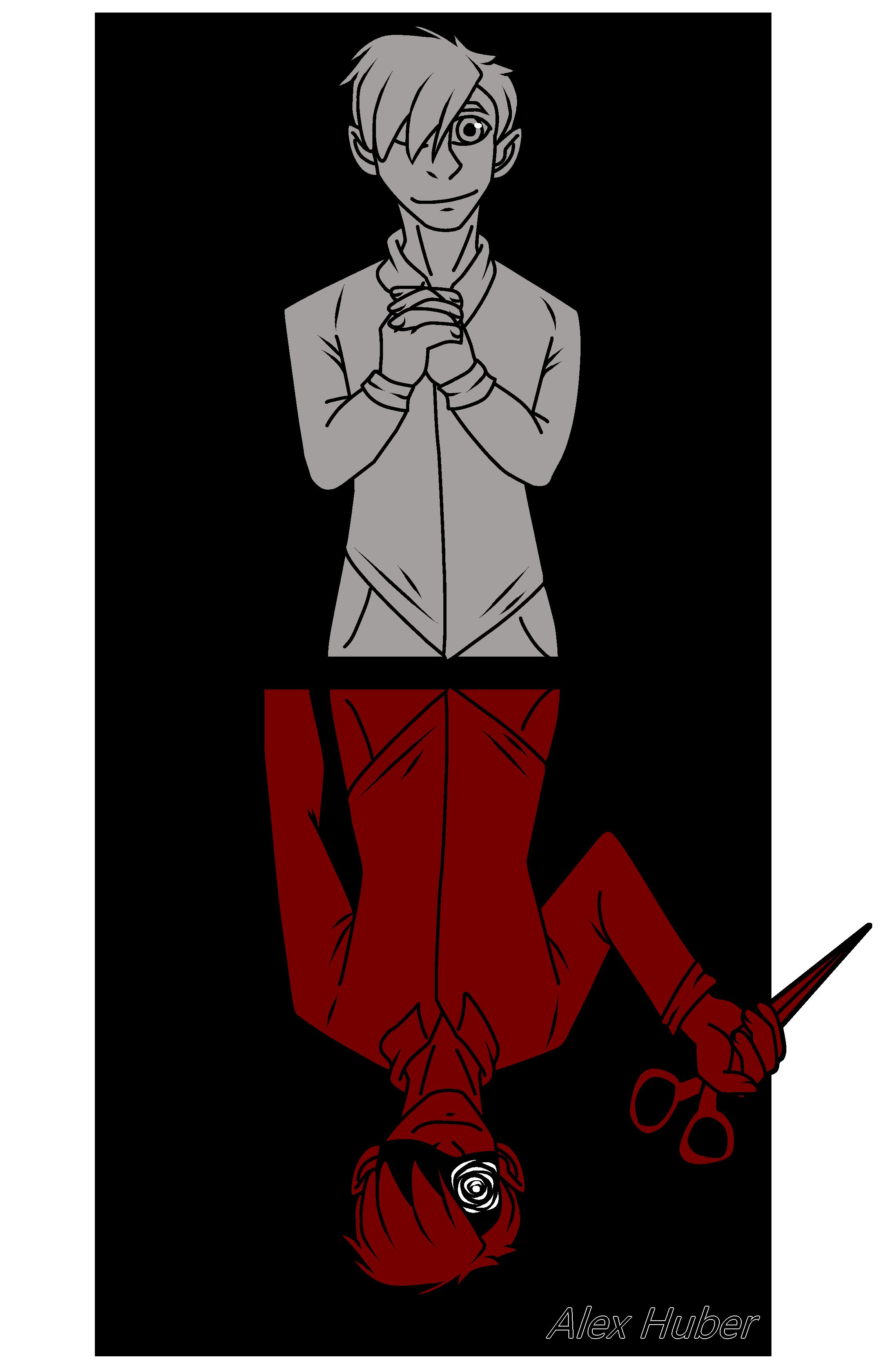
Major Project – Alex Huber

Word count: 547

For my major project for this course, I wanted to tackle one of the texts we read this semester, Harper Lee’s To Kill a Mockingbird, and one of its most iconic disability-aligned characters, Arthur “Boo” Radley. Throughout the novel, Arthur is portrayed as a phantom hanging over the town of Maycomb, to the point where Scout, Jem, and Dill see him as an inhuman bogeyman. This is further punctuated by the nickname he is referred to as throughout the story: Boo. However, at the end of the story, Arthur is revealed to be a normal person, just like anybody else, and his implied disability (as the nature of his disability is never explicitly named or revealed) does not change that. As part of this project, I wanted to include both depictions of Arthur and show how they mirror each other, as although he is not a monster or bogeyman the rumors and stories are a part of how the people of Maycomb perceive him, especially the children.

At the start of the novel, Scout, Jem, and Dill have never seen Arthur, and as such they can only imagine what he looks like. In the first chapter, Jem describes him as being “about six-and-a-half feet tall,” “[dining] on raw squirrels and any cats he [can] catch,” having “blood-stained” hands, with “a long jagged scar that ran across his face,” and teeth that “were yellow and rotten” (Lee 14).. While I kept this description in mind as much as I could, ultimately I decided for a more abstract approach with the two depictions of Arthur. The Arthur at the bottom of the image is the bogeyman Boo Radley, colored entirely red with the blood staining his body from the animals he supposedly eats and holding the pair of scissors he is said to have stabbed his father with. His eyes are hidden by shadow, aside from the light shining from the one eye not covered by his hair, further pushing the imagery of Boo being a monstrous figure haunting the minds of those in Maycomb.

In contrast, the Arthur at the top of the image represents the Arthur described in the final chapter of the book, when Scout properly sees him for the first time after he saves her and Jem from Bob Ewell. In this description, Scout notes how his “face [is] as white as his hands, but for a shadow on his jutting chin,” how “his cheeks [are] thin to hollowness,” and how “his gray eyes [are] so colorless [she] [thinks] he [is] blind” (Lee 310). Once again, while I kept this description in mind as much as possible with my piece, I took an abstract approach and instead colored the entire Arthur a pale grey, depicting him smiling gently at the viewer with clasped hands. This depiction of Arthur, the true Arthur, is far more gentle than legends would have one believe, and while he does ultimately kill Bob Ewell, he only does so to protect the children he considered his friends.

Arthur Radley is far from the only example of a disability-aligned character in literature with a dramatically different reality from his reputation, but he is perhaps one of the most iconic, and certainly he is one of the most memorable characters from Lee’s novel.

Citations:

Lee, Harper. To Kill a Mockingbird. HarperCollins, 1960.

I hereby declare upon my word of honor that I have neither given nor received unauthorized help on this work. Alex Huber.